Health Science Report
Medically Reviewed by Dr. Joe Feuerstein | Ivy League Physician & Gut Health Specialist
Research Analysis by Digestive Health Editorial Board
Published March 2026

If you're reading this, something is stuck — and nothing you've tried is moving it.
You've strained. You've waited. Maybe you've taken a laxative hoping it would finally work. And you're still sitting there, uncomfortable, frustrated, wondering why your body simply won't do what it's supposed to do.
You're not doing anything wrong. And you're not alone.
"I tried fiber. I tried two different laxatives. I even tried warm water with lemon every single morning for a week. Nothing moved. I didn't know what else to do."
Straining harder won't help. And laxatives may be making it permanently worse.
Not because you're doing it wrong. But because neither of those things addresses what's actually causing your poop to get stuck in the first place.
In 2019, researchers from Columbia and Duke Universities discovered something most doctors still don't test for — a specific mechanism that gradually shuts down the muscles responsible for pushing waste out of your body.
And every time you strain or take a laxative, that damage gets worse.
These findings were not welcomed by the companies that profit from repeated laxative use. What the researchers discovered about why conventional treatments backfire is something the industry has no interest in making public.
When these muscles stop working, the problem escalates fast.
Waste backs up. It dries out. It hardens. And the longer it sits, the more difficult it becomes to move — no matter how hard you push.
What's worse, every failed attempt may be compounding the damage — in ways most people don't find out about until the problem is significantly harder to reverse.
This is why researchers now consider ignoring stuck poop for even two or three days a serious health risk — not just a digestive inconvenience. The damage compounds silently, and most people don't realize how serious it's become until the problem is significantly worse.
There is one specific cause — and it's not what most people think.
Researchers found there is one underlying reason your bowels stop responding — and it has nothing to do with what you ate, how much water you drank, or how long you've had this problem.
Once you understand what it is, everything suddenly makes sense. Why the laxatives stopped working. Why straining makes it worse. Why this problem keeps coming back no matter what you try.
The details are not something most doctors are currently aware of — and they're certainly not something the laxative industry wants widely known.
What thousands of Americans found — and the research that explains why it works.
People who dealt with the same problem — fiber that didn't work, laxatives that stopped helping, days without a single bowel movement — are now sharing what finally changed things for them.
The discovery behind it comes from an Ivy League physician who spent years researching exactly why poop gets stuck — and what conventional medicine consistently gets wrong.
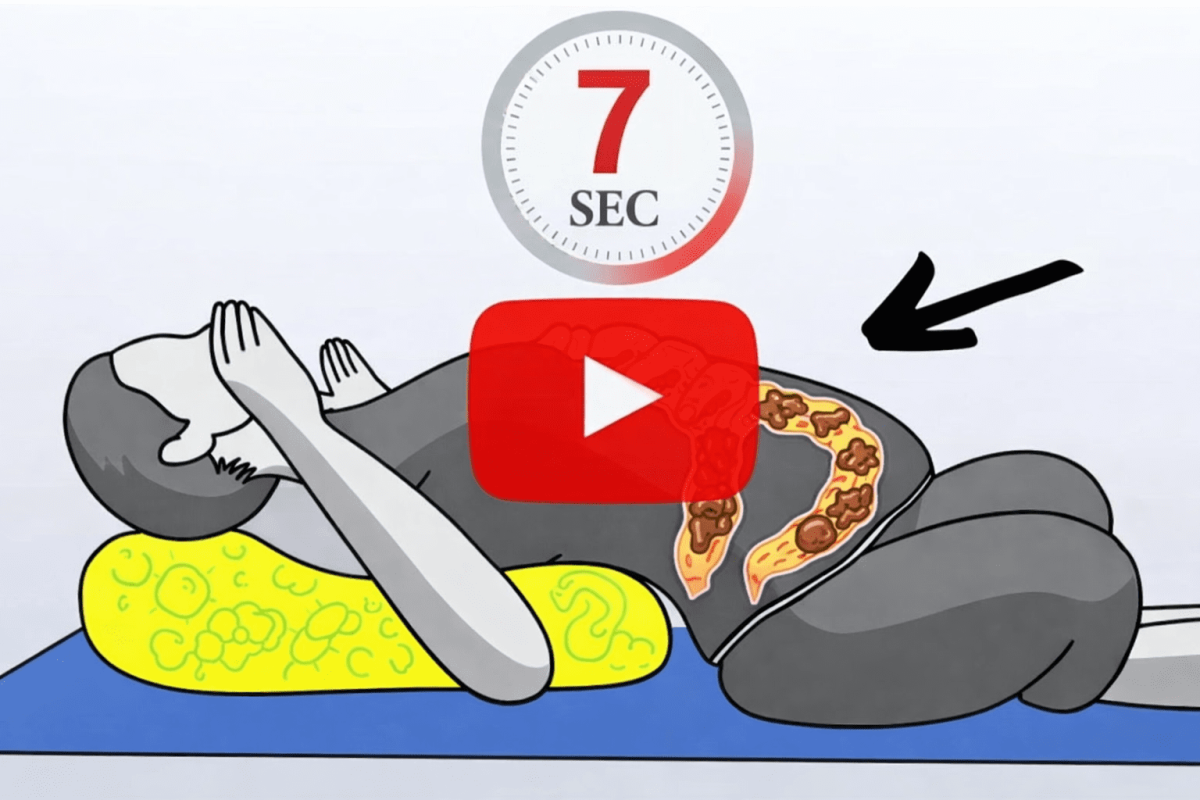
If nothing you've tried is working, what you're about to see may be the most important few minutes of your day.
The video is still available below — but we cannot guarantee how long it will remain accessible.

The content on this website is for informational purposes only and should not be considered medical advice. We recommend consulting a qualified healthcare professional before making any changes to your health regimen. If you have any existing medical conditions or concerns, please seek guidance from your physician.
It is always advisable to conduct independent research and verify information from multiple sources before making health-related decisions. Consult your doctor before following any suggestions mentioned on this site or in relation to the promoted product.
Individual results may vary. The testimonials shared on this page represent personal experiences and are not indicative of guaranteed results.
This website does not provide medical diagnosis, treatment, or professional healthcare advice. Always seek the opinion of a licensed medical professional for any health-related inquiries.
Copyright 2026
All rights reserved